Tuesday, July 10, 2012

Are Academics Worth It?

That was the question Sarah Strohmeyer asked in her new novel Smart Girls Get What They Want. I lightly touched on the question in my review, but, as a life-long "smart girl", I thought it might be interesting to explore the answer further.


I mean, of course I want the answer to be yes. I don't want to think that missed out on anything or wasted any opportunities. No one wants to think that, right? Which is why I have my list of reasons why my academic experience was great.

First off, the fact that feel that made the most of my education. I tried as hard as I could in every class. I genuinely wanted to learn, and I made sure to learn everything I could. I memorized every list, but I also learned every lesson. As a result, I feel fairly good about my knowledge and skills in every subject from English to math to biology. I like feeling intelligent and informed. I feel like I learned not only how to succeed and get good marks, but also how to overcome challenges and keep trying even when you think you will never improve.

Moreover, I love the feeling academics gives me. I love the feeling of good test mark. I wake up in the morning remembering the unexpectedly high essay mark I received the day before. And, for me, it is not just a hobby or a passion. It is an identity. It is the thing I'm good at. Some people are outgoing and know how to say the right things and impress the right people. Some people are good at sports or drama or some fancy musical instrument. I am good at school. I am the IB kid, the perpetual Honour Roll student, the "smart girl". That who I've been for so long. I don't know what I'd be if you took that away from. I suppose you could view that as a negative. But I'm just so happy that, through academics, I found so many positives. Academics allow me to feel smart and confident and happy. To me, that is not a negative.

Furthermore, academics provided me with a community. In Strohmeyer's novel, the main characters fear that they will have blank yearbooks. Mine was full, every year. Of course, that was large bit of luck on my part. I ended up with the same twenty kids in every class, every year. While that certainly had its drawbacks (which could fill a series of blog posts) it also had so many benefits. I knew those kids and they knew me. I filled their yearbooks and they filled mine. I still see them all the time. And I only became one of them because of academics. Perhaps it was pure luck, how it worked out; all I know, is that I am tremendously thankful for that academic community.

Those are all great things. But they all came at a very, very high cost. The most obvious is time. Like I said before, every minute you spend studying is a minute you're not having fun. That is sacrifice, and it sucks. To be a strong academic student, you have to put in so much time and effort. You lose friends, you lose sleep, you slowly lose your mind.


But you also lose a million things you never ever had. You lose opportunities for new experiences. Here's one: your first job. When I was in high school I was in such a tough academic program that I would've never been able to juggle my coursework with a job. As a result, I am already behind in the job market. While most people my age have years of part time work on their resumes, I only have Honour Roll Certificates. Which makes it really, really hard to get a job now.

But that's not the biggest thing you're giving up. No, the biggest sacrifice I made as an academic student was my social life. Unlike Strohmeyer's Gigi, I didn't have amazing best friends in high school. I had a few friends, even good friends, but not like Neerja and Bea. I certainly didn't have a Mike. Nor did any of my friends. No one dated in my high school class. As a result, we are all now in university, excelling in our classes, but feeling extraordinarily out of place in our social groups. Everyone else has ex-boyfriends and "experience" (whatever that means). Most of us have never gone on a date or kissed a boy or had a boyfriend. We are physically nineteen, but our experience levels with dating are lower than an average fourteen-year-olds. That makes us feel embarrassed and ashamed; I tell you, it near destroys our self esteem.

We often say that we aren't "real" teenagers. We never went to the high school parties or had the high school boy drama. We feel like we're living our social lives four years behind everyone else. That there, that's a big reason academics are not worth it. At least not for us.

So, are academics worth it? I think I'll allow myself to go with the easy, regret-free answer: yes. But don't press me on it and ask if I would "do the same all over again". Because I don't think there's an easy answer to that question. I've done well on all the tests and essays, acing every question. But that's one I think I'll leave blank.

Book Review: Smart Girls Get What They Want


Summary: Gigi, Bea, and Neerja have always been best friends--and book nerds. They've always studied the hardest and achieved the most. But, suddenly, they find themselves asking: at what cost?

Review:

I did not connect with this book.

In high school, I was a complete nerd. An A-plus student always; honour roll regular and scholar extraordinaire. And still, I did not connect with this book.

And I don't know why.

On its surface, I think Strohmeyer poses some interesting questions, ones I have often asked myself over the years: Are academics really worth it? What do you really get out of it? And what do you miss out on because of it? And, on the surface, I love that Strohmeyer is celebrating smart girls so much. It's a positive message, one which popular culture so rarely champions; it's music to my ears.

I was Gigi in high school. Just without the best friends. I studied like mad day and night. I prepared for every question on every test, in every subject. I fit my life around my academics, instead of my academics around my life. I rose and fell with every test mark, every essay critique. And, as I look back on high school, I often ask myself: was it all worth it? In her basic premise, I think Strohmeyer understands that worry. In her execution, however, I did not feel understood at all.

Sometimes, when I read books I feel like the author is able to read my mind, like they're somehow able to know me in ways no one ever has. I love that feeling; to me, that is the magic of reading. While reading this novel, I expected that connection. I yearned for it. This was a situation so close to my own experience; the connections should have sparked on every page. Instead, to me, the words failed to ignite. Instead of elation, I felt frustration, over and over and over again.

It didn't feel like Strohmeyer had been a nerd; it felt like she had studied nerds. She got a handful of moments right--Gigi's obsession with Bones, the late nights working on papers, the utterly amazing moment in the bookstore with Mike, when Gigi describes her love of romance novels. And the friendship between Gigi and Bea and Neerja, while not very similar to my experiences at all, was certainly sweet and genuine. I loved how Gigi considered her friends feelings and sacrificed for them. That felt real and just so right.

But Strohmeyer also got so many moments wrong. Some parts felt simply tone deaf to me. Gigi's fear of presentations was rather absurd, in my opinion. I am super shy and awkward and terrible at giving presentations. Or, at least, I used to be. But then I had to do them so often, I just didn't care anymore. Seriously, in grade nine French class I had a teacher who made me do a presentation every single week in a language I didn't understand at all. Teachers do not care if you are bad at public speaking. They make you do it in every single subject. I gave weekly speeches in English and French. I did skits in biology. I even had presentations in math and gym classes. No one would spare me, no matter how much I hated it each and every time. Which is why I did not buy Gigi's explanation that teachers did not make her do presentations anymore, because they knew the result. No, for Gigi to get as good marks as she did, she would have had to do what I did, time and time again: put the mark before the fear. She would have had to invent a version of herself that could get up and speak in public. If she wanted the 90%, that's what it would have taken. I know--I've been there.

Beyond that, there were lots of smaller things that felt off to me. The fact that, as they became increasingly involved in extra curricular activities--not to mention romantic activities--there was no mention of how their grades were affected. Which is wrong. Every moment they spent having fun or whatever was a moment they didn't spend studying. If they were giving up their lives for academics, they should've had to give up some of their academic achievements for their new lives. It's a basic equation; it's the only thing that makes sense. Furthermore, I was quite bothered by the idea that smart kids had to be well versed in high culture. There were numerous times throughout the novel that a character would be considered dumb and then--Oh My God!--it was discovered that they read Anna Karenina, so they were actually smart. Now, I know a lot of nerdy, academic kids. And most of them watch shows like Gossip Girl and read so-called "lighter" books. Seriously, when you spend all your time analyzing poetry and understanding complicated math formulas and learning about European history, you just want to relax at the end of the day. You do not want to read insanely complicated Russian novels. On a literal level, that did not make sense to me. On a philosophical level, it just annoyed me. I hate culture snobs. I hate that this book validated them so much.

I'm ranting and ranting about minute details, I know. I apologize. This is just a very hard book for me to judge. Because I so very much wanted to like it. I wanted to connect with it. But try as I might, I just couldn't. So, ranting and roaring over, I guess I'll just say that this book didn't really work for me, but that, in no way, should stop it from working for you. At its core, Smart Girls Get What They Want is a semi-unique book with a very positive message. Perhaps you will be able to connect with it better than I did. Perhaps it is just too close to my experiences for me to judge. What do you think, readers: have you ever felt disconnected from a book because it was too close to your life?

Friday, June 22, 2012

Growing Past YA

I recently turned nineteen. That means I have less than a year left of official "teen" life left. And then I'll be an adult or something. At least, that's what they tell me.


The point is, I am quickly aging out of the Young Adult demographic. I started reading YA when I was nine years old, and for years, I was younger than the protagonists. I wasn't even in middle school yet and I was reading about seniors in high school. It mad me feel mature and grown up. Then I started high school, and I was the same age as the protagonists, which was nice. They understood me and experienced the same things as I was experiencing right at that moment. Or, at least, they experienced the things I wanted to experience. The first romances I longed for, the best friends I dreamed of. But now, I'm in college. Slowly but surely I'm moving away from the YA set. I'm growing up and I really don't know if my love for YA will be able to grow with me.

I have a number of friends my age who insist that they cannot read books with protagonists that are younger than them. I don't have a hard rule like that, but I understand where they're coming from. When we graduated from high school and started university, we felt like we were past it all. The high school drama. The 9:00 to 3:00 school day. The group projects. Parents and principals and all the other people trying to control you. Right now, I think we all want to distance ourselves from that, not dive back into it. It all feels a little immature and silly and we kind of want to pretend we're over that.

I am still reading YA. But I have, for the most part, stopped reading middle grade fiction. It's all a little too cutesy and innocent for me. And I won't specifically reject a book if I read that a book has a fourteen year old protagonist, but it certainly doesn't do the book any favours. I'm much more enthusiastic about books about high school seniors, people who are worrying about college and future plans, just like I was (and still am). I can connect with those feelings so much better. They feel so much more relevant to my life than some grade nine drama.

On a theoretical level, I like to believe that I can appreciate YA, no matter my age. That the most rewarding part of reading is not the plot or the happy ending, but the ability to connect to characters and authors on an emotional level. And there is no shortage of YA books that provide that connection. When I read Elizabeth Scott's Perfect You, I cried, as touched the exact places in my heart that my best friend had bruised. When I read Deb Caletti's Stay, I smiled at all the small moments I recognized, all the exact doubts of insecurity and poor self-esteem that I have nursed all my life. On this theoretical level, it seems as though it's not about abandoning YA, but abandoning bad YA. Which is, of course, silly and impossible. Because the things that I love in books aren't written in the descriptions on the back covers.

On a much more minuet and literal level, I am concerned. I just finished Terra Elan McVoy's Being Friends with Boys, in which the Charlotte, the protagonist, said "I watched Shrek everyday when I was little". Now, Shrek was released when I was nearly ten years old. It's not a movie I watched when I was "little". I remember seeing it theatres, and enjoying it. But I was too old to watch it obsessively in the way that little kids watch movies. When I was "little" I loved The Lady and the Tramp and The Little Mermaid. Those are my childhood reference points. What bothered me about Charlotte's statement was not that I didn't understand the reference, it was that I didn't relate to it. It was not from my generation; this not a movie my friends and I grew up with. It's a small, seemingly insignificant reference, on its own, but it raises a larger issue: as a get older, won't I relate to the references less and less? Thus, won't my emotional connection with YA books grow weaker and weaker?

Like so many questions and concerns I talk about on this blog, I don't have an answer. And before anyone says it, I am more than aware that there are many, many people who read YA who do not have the word "teen" in their age. But I'm just not sure I will be one of those people.

Friday, June 15, 2012

Looking Back

I think I'm going to look back at this time like I now look at the awful stage of my life known as puberty: something necessary, painful, and, thankfully, long over.

My parents are getting divorced. No, that's a lie. Technically, legally, they will be separated. I don't know why they don't want to go the whole way with it, other than the fact that divorce is probably more expensive. But, for all intents and purposes, I'm viewing it as a divorce, seeing as they will not live together or have much contact with each other at all.

At least, that's the plan, for now. Supposedly what their (our) future is going to look like. But right now, that is very hard to imagine or believe in any way. Right now, I'm sitting in my bedroom, the same one I've occupied since I was seven years old. I'm staring at the white and red walls, which used to be purple, before which they were yellow. I'm sitting at my desk, where I sat to do so many projects and write so many essays, from elementary school all the way to university. Right now, in this moment, nothing's changed. I'm ten years old and all the adults are telling me that my body going to change in some freaky ways, and even though they've told me what some of those (gross) ways are, I have no idea how this will affect me or change my life.

Like seriously, it feels like I'm reading an outline for my life over the next year, and all I can do is add little annotations like "that might hurt" or "that's going to be bad" or "I'm not going to like that". Selling my childhood home, the only place I'm ever truly comfortable? Yeah, that's really, really going to hurt. Moving an hour away, to a part of the city I wouldn't even refer to as Toronto, a place I've never been, and, more importantly, never wanted to go? Yeah, no, I'm not going to enjoy that, in any way. Splitting my time between not only houses, but cities three hours apart? Yeah, that's going to really suck for me.

It all feels so overwhelming and out of my control. I feel like life has handed me one of those stupid body books, telling me what to expect over the next year, outlining the physical changes of my life with no regard to the emotional challenges they bring.

I remember when I was about eight or nine years old I read this terrifying book called Newton and the Giant, which told me that people lost their ability to imagine when they left childhood. I cannot emphasize how completely petrified I was by that idea (that author, who is a complete liar, deserves a hard slap upside the head, in my opinion). I thought puberty would not only steal my body, but also my favourite part of my mind. Now, though, I'm not afraid that I'll lose the ability to imagine new things. I'm terrified that I'm going to lose the ability to remember. Which, in a lot of ways, I fear is worse.

Right now, I'm upset about a lot of things. I'm upset with my parents. I'm concerned for my mother. I'm upset about losing my family. I'm sad about losing my house. There are ways to comfort yourself about each of these things ("it's for the best", "we'll always be a family", "it's the people that matter, not the places"). And sometimes, saying those things really does help. But sometimes not. And right now, as I'm sitting in this house I love, surrounded by memories, there's nothing I can tell myself to make me believe that I'm not going to forget all of it, myself included.

When I was ten years old I lost control of my body and I thought I was losing control of myself. Now, almost ten years later, that fear is back. At ten, I was standing on the edge of deep gulf, staring down into the darkness, trying to figure out what I was going to become. I'm standing there again today. And only thought that I have to comfort myself is that I'm ten years older, ten years wiser, and have ten years more experience dealing with pain and picking up the pieces that I should be able to handle it all better. But that's probably not true. But how do I know, right?

Which is why I repeat this to myself: this is something necessary, something very painful, and I promise, one day, it will all be long over.

Thursday, May 31, 2012

Snap Reviews

Confession Time: Most of the books I read, I don't review on this blog. Unless I feel a book is unique is some way or I have something unique to say about it, I don't feel the need to review it. Or, at least, I can't get myself to finish the review. You have no idea how many partially finished reviews exist in the garbage can of this blog. And I feel stupid and silly about that.

Apology Time: Because I've been failing you as a reviewer for so long, and I've missed out on reviewing so many lovely books in these last few months, I thought I'd share some quick thoughts on each.

A Match Made High School by Kristin Walker (synopsis)


Kristin Walker's books seem to be cursed with silly titles and even sillier covers, but if you can see past that, you'll be able to enjoy this intelligent, romantic read. 

Really and truly, I feel this book is a great example of what the young adult romance genre has to offer. It has the requisite romance, but it's not as predictable as the synopsis would suggest. On top of that, it also has an interesting exploration of marriage and relationships from a teenage perspective. Sure, the premise is all little silly, but, to me at least, also a little intriguing. For me, this book was a quick, smart, enjoyable read. 

7 Clues to Winning You by Kristin Walker (synopsis)


Yes, I was so charmed by Match that I immediately went out and bought Clues (what can I say? I'm a binge reader). On the whole, I think Match is a more complete book, but I still think Clues has a fair amount to offer. 

Blythe is not the easiest protagonist to like. She's very snobby. But I like'd that the novel addressed class in some way, when most novels shy away from such issues. I also quite enjoyed the scavenger hunt and her relationship with Luke. I thought they were a really, really sweet couple (for anyone who has read the book, I really enjoyed the stuff inside and outside the principal's office at the end). I thought her relationship with her parents was also quiet interesting. As someone who is currently being forced to sell her house, I very much related to Blythe's sadness about leaving her childhood home. 

And I loved Miss Franny and Miss Eulaili, of course (again, for those who've read it: the scene where they buy the magazine? Hilarious!).

The Fine Art of Truth or Dare by Melissa Jensen (synopsis)


I was hesitant to pick up this book. On one hand, it had a cute, unique cover and a fair amount of buzz around the blogosphere. On the other hand, I had really and truly tried to get through Jensen's previous novel, Falling in Love with English Boys, and I just couldn't. But when I saw it in the bookstore, I let myself forget that. I just couldn't resist. 

Ultimately, for me, Fine Art was a good, but not great read. I loved Ella's relationship with Edward Willing. I thought that was original, and I really loved a character who had a unique passion like that. I also liked her relationship with Alex, as well as her friends. I also enjoyed her family quite a lot. I love characters with big families, especially noisy, funny, real families like Ella's. At no point did I fall in love with this book, but I wouldn't turn anyone off reading it. 

For Keeps by Natasha Friend (synopsis)


This one was such a good read. Enjoyable and relatable and relaxing. I can't exactly say why, but it felt kind of like a bubble bath to me. 

I liked so many things about this book. I loved Josie's relationship with her mother, Kate. It was sweet and  very Gilmore Girls-esque, in the very best way. I can't believe I'm saying this, but I loved how Josie's romance with Matt was not the main part of the story, but rather a subplot. I also loved how they started dating at the beginning of the book, rather than the end, because I got to see their relationship develop. That's is so freaking rare in YA and I loved it so much. Josie's best friend Liv was great too; I especially enjoyed the fights they had, and the process of Josie's figuring out why Live was acting like she did. That seemed very true to life to me and mature to me. 

I read a review that warned people not to read this book if they're only looking for romance. I want to reiterate that. This book has romance in it, but it's very much secondary to all the stuff with Josie's mom and dad. But all that stuff is so good, you should pick up this book anyways. 

Into the Wild Nerd Yonder by Julie Halpern (synopsis)


A certain blogger has raved and raved about Halpern's books forever. And while I still haven't read Get Well Soon, I thought I'd give this one a try. 

I found this book to be unique and cute. I was more than a little irritated by the slow progression of the plot--the freaking premise (or, at least, the one described on the back of the book) doesn't even begin until a hundred pages into a this two hundred and fifty-odd page book. Also, Jessie's friends at the beginning were awful people and annoying characters. But Jessie's brother was cool. And her new friends were kind of awesome. And I just adored all the Dungeons and Dragons stuff. I wish I was cool enough (or had enough imagination) to play this game. And the romantic moments born out of those friends and that game are quite excellent. For me, the book certainly improved as it went along. I enjoyed how it showed the end of a friendship, something I have experienced myself, and, like Jessie, found quite painful. However, I was never fully on board with what I found to be the overly didactic exploration of geek/nerdom. But, all together, a good book. 

Question Time: Do you other bloggers ever feel like me? Like every post has to be perfect? And every review has be long and insightful and unique? And how do you deal with this feeling? What is your solution? 

Friday, May 25, 2012

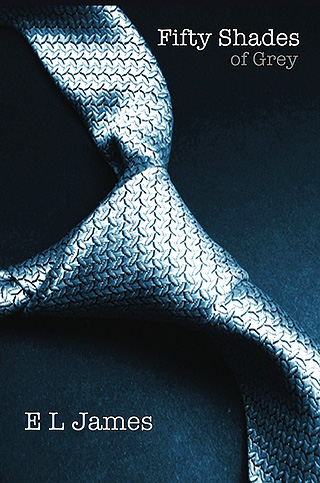
Book Review: Fifty Shades of Grey


E. L. James’ Fifty Shades of Grey is unappealing and repetitive. It numbed my mind through boredom, not through sexiness.


The novel stars soon to be college graduate Anastasia Steele, who becomes involved with the very rich, very handsome, very charming, and very controlling Christian Grey. Mr. Grey soon makes it known that he not looking for a normal relationship, but rather sexual relations involving rules, punishments, and an array of pain inflicting instruments. He draws up a contract outlining what he wants from Ana, binding her as the submissive to his dominant. From then on, the novel tracks Ana’s acceptance of her sexual desire and submissiveness.

Fifty Shades of Grey is billed as an erotic romance, suggesting that it is meant to be exciting and enticing, expecting its reader to be as sexually allured by Christian as Ana herself is. Personally, I only found Christian abhorrent, abusive, and thoroughly unsexy. However, I believe it is a matter of personal taste, and as such, I believe a reader’s enjoyment of the novel will depend largely on that reader’s personal sexuality.

For women, I think their enjoyment of the novel will also be decided by their definition of female equality. In the novel, Christian attempts to mould Ana into the perfect submissive partner by controlling what she eats, how she dresses, and even what car she drives. As Ana consents to this treatment, the reader must ask herself: does feminism mean being treated as an equal or being given the right to choose how one is treated? Personally, I did not disapprove of Ana’s choice, as I believe feminism should be about the right to choose above all else. It still made me incredibly uncomfortable, however, when Christian demeaned and manipulated Ana; she may have personally consented to being treated in such a way, but I do not consent to my gender being treated so poorly. Part of me wants to assume this is true of women at large; however, Fifty Shades of Grey has been a New York Times #1 Bestseller for nine weeks, so this cannot be true.

Perhaps the bigger issue for me, however, was the monotony in the novel. On every level, James’ work is repetitive, be it the clichéd phrasing of the prose, the tired character descriptions, the overworked metaphors, or the endless number of sex scenes. James feels the need to constantly remind the reader that Christian Grey has gray eyes, as if the moral ambiguity of the character is not already spelled out enough by the novel’s title. Ana often references the Greek myth of Icarus: at first, I found it interesting; by the fifth time it is mentioned, I wanted to throw the book across the room. More than anything, I was bored to tears by the never-ending sex scenes. At first, they were vaguely appealing; by the end, I was nearly asleep.

At its heart, I believe the Fifty Shades of Grey trilogy presents an intriguing, unique romance. However, for me, it would be torture to try to get through another thousand-odd pages of Christian torturing Ana; for you, however, it might be a lot more alluring and positively mind numbing.

Wednesday, May 23, 2012

TV Review: Glee Season 3 Finale

I loved the first season of Glee. Like, I was obsessive about it. Then, it fell off a cliff. Or, the charms of Ryan Murphy no longer charmed me in the same way. Sue Sylvester stopped being funny and started being annoying. Kurt stopped being amazing and started to become whiny. By this point, at the end of the third season, I have all but written off the show. I follow it, through reviews and word of mouth, but I barely ever watch. But, then, last night, I was bored, and I heard the finale was on, and, well, you know. And the thing is, it wasn't actually terrible. I would dare to say it was actually good. For a number of reasons:

1. They didn't completely screw up the Rachel/Finn thing


I've never, ever been a Finchel fan. Well, who am I kidding, I've never even been a Finn fan. Going into the episode heard that they were freaking ENGAGED in HIGH SCHOOL, I was sure it was just going to blow up, or descend deeper and deeper into the crazy, illogical world of Gleedom. However, I was wrong. Instead of getting a ridiculous teen wedding, we got a heartfelt, rational goodbye. For the first time, I actually saw some redeeming qualities in Finn Hudson. I thought his whole speech in the car was amazing. In that moment, with those words, I truly believed he loved her. Just as they were breaking up, I finally began rooting for them as a couple; stupid, I know.

Usually, characters on this show make stupid, nonsensical decisions. Last night, however, Rachel was only making immature decisions. She was scared of losing Finn, and having her heartbroken for the first time. She was terrified of facing New York on her own. So, she made the silly plan to defer NYADA. Usually, I would want to throw things at the TV for such stupid decision making. However, this one time, I could see where Rachel was coming from. I knew it was the wrong decision, of course, but, for once, the show showed me why that was the logical decision for Rachel's character.

I have been actively rooting for Finchel to break up since whenever they got together (beginning of season two? Maybe?). But that was just so I wouldn't have to suffer through the sight of them on screen anymore. In last night's episode, I still wanted them to break up. But watching the break up actually happen was surprisingly sad and sweet; I applaud the episode for being so emotionally effective.

2. Kurt was awesome


I've always thought Kurt was a fairly awesome character; when he got together with Blaine, his awesomeness increased 1000%. This, coupled with his friendship with Rachel, made him a great character to watch in last night's finale.

I loved the early Kurt/Blaine scene. I really do hope they stay together. What can I say: I'm a fangirl. As such, I knew I would savour every glance, every word, every kiss between them. And I did. Ryan Murphy hasn't screwed that one up. Yet. He has also been surprisingly great about the Kurt/Rachel relationship, no more so than in their scenes last night. I just adored the envelope opening scene. I love how this show deals with the theme of broken dreams; I am really glad they made graduation such a central focus of this season. In that room, with Kurt and Finn and Rachel, my heart just broke. It wasn't an overdramatic moment, in the way that so many Glee moments are. Instead, it was subtle and realistic and just so sad. Cory Monteith, Lea Michele, and Chris Colfer were all amazing in that scene.

3. The songs were actually good

I know! I can't believe it! Do you know how long its been since I've watched a full song on Glee? I usually listen to the first bit, then want to scream, and skip to the next scene. But this time, I actually enjoyed the songs. That hasn't happened since the first half of the first season! I just can't believe it!

Perhaps most shocking of all: Matthew Morisson actually put on a good performance! Who knew he had it in him?!?


I know, I'm being very sarcastic. I'm sorry. I just never thought that would be a redeeming part of the show, ever again. But last night, I enjoyed Mr. Shue's song, and the senior/junior and junior/senior songs. That alone is a reason to write a post about this episode.

And then, I can't forget Burt's dance. I just about died. It was AMAZING. I loved it for so many reasons. It was the perfect present for Kurt. It was such a great moment for their relationship. It was such a nice moment for the show, where it rewarded longterm fans. I remember the Single Ladies dance from season one. I loved it then. Last night, I was so happy to see it return. A truly great scene.


I'm choosing to gloss over the less great moments from last night's episode (I still hate Quinn, for example, but we don't need to talk about that). For now, I am very happy with the show. I may even watch the season premiere in September, which is big for me, seeing as I haven't watched two consecutive Glee episodes since spring of 2011.

Finale Rating: 4/5 Stars (okay, still a relative scale. This is Glee after all. Let's not go comparing this to Parks and Rec or something. Let's stay sane.)

Related Posts Plugin for WordPress, Blogger...